



On November 14, 2026, students of the seventh, eighth and ninth grades of the Russian School at Holy Transfiguration Cathedral, together with their teachers and parents, set out on a special field trip: to Holy Virgin Mary Cathedral on Micheltorena Street and the Russian museum next to it.
The day gave us a wonderful chance to touch the history of the Russian emigration, to learn about the lives of our compatriots who came to America early in the last century, and to discover one more precious page in the history of Los Angeles.
A Church Built with Faith and Love
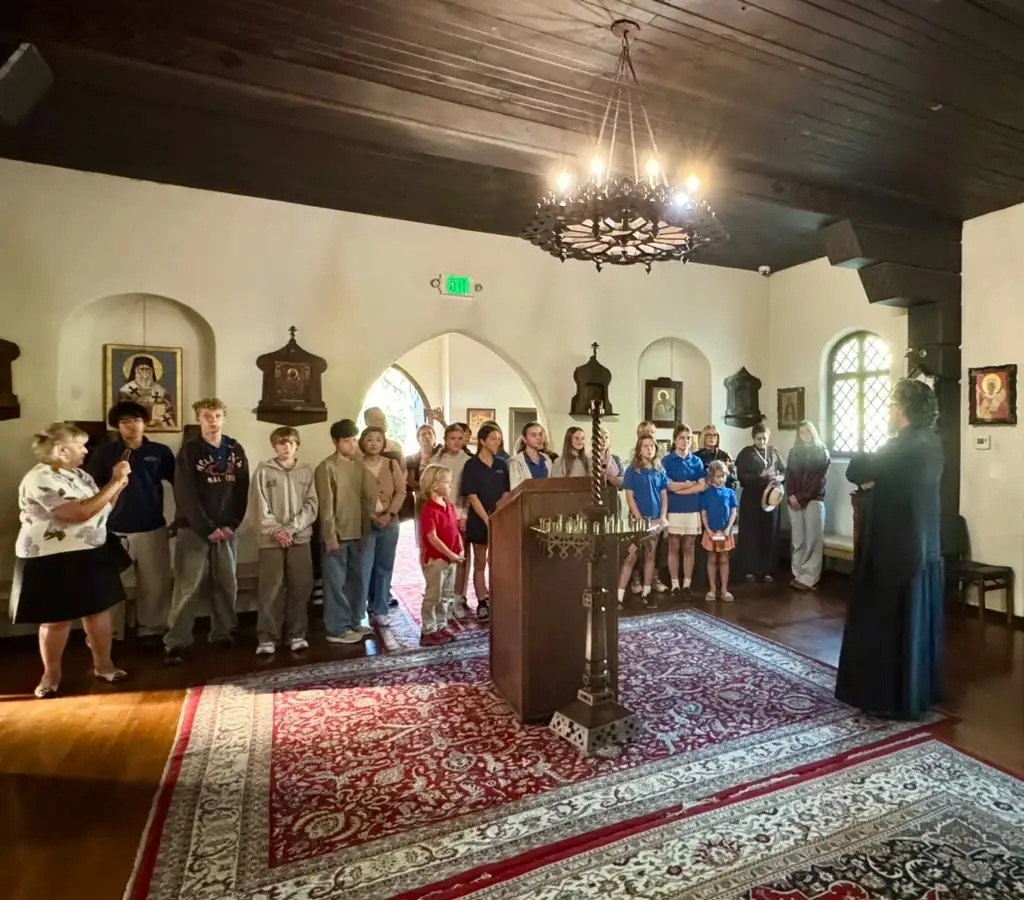
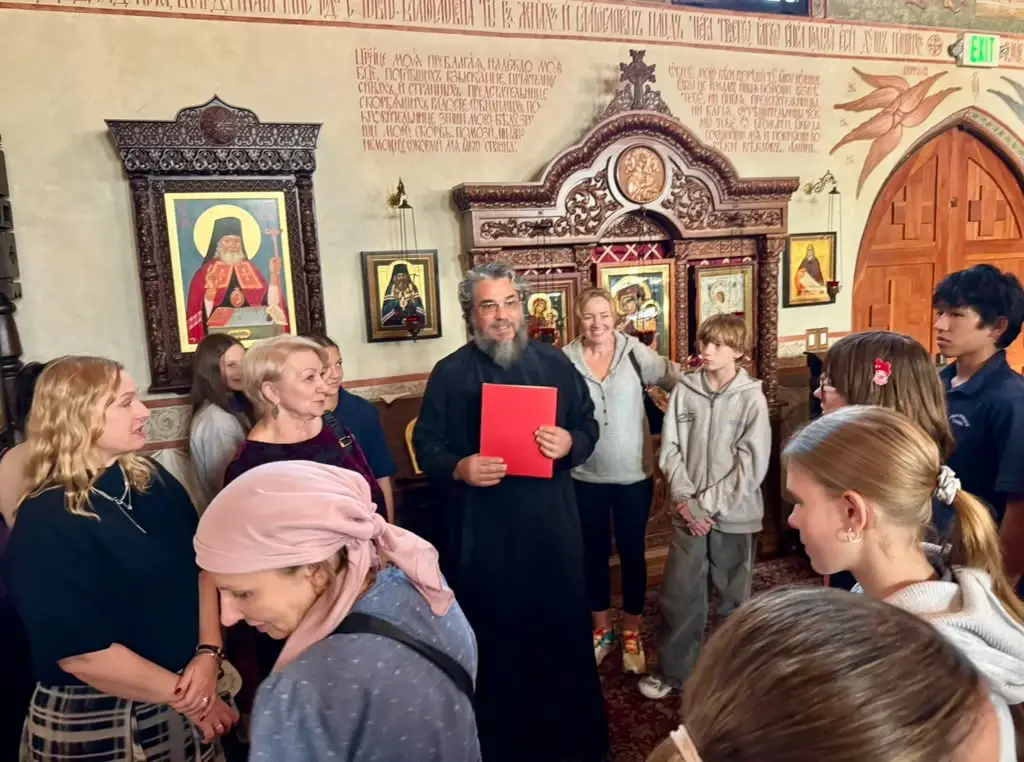
At the doors of the cathedral we were warmly welcomed by its rector, Archpriest Nazariy Polataiko. He gave the students a fascinating tour and introduced us to the rich history of one of the oldest Orthodox churches in Southern California.
The parish began in 1923, when Russian émigrés who had left their homeland after the Revolution and the Civil War came together to form their own Orthodox community. The first services were held in an Episcopal church building on Wilson Street. In 1927 the parish bought land on Micheltorena Street, and on July 22, 1928, the new church was solemnly consecrated in honor of the icon of the Mother of God “Seeker of the Lost” (Vzyskanie pogibshikh).
The cathedral was built with donations from Russian émigrés, people of many different backgrounds and professions: members of aristocratic families, former officers, Cossacks, artists and performers. We especially remember Father Nazariy’s story about the Cossacks who gave a tenth of their earnings from their riding shows to build the church.
Remarkably, the cathedral’s story has been tied to Hollywood from the very beginning. The church was designed by Alexander Tolubeev, a set designer who worked for Hollywood film studios. He based it on his sketch of a church set for the film The Cossacks, inspired by the ancient architecture of Pskov. And so a corner of old Russia appeared on California soil.
Father Nazariy showed us the original church building and the recently built side chapels, and told us about the work now under way as the cathedral approaches the hundredth anniversary of its consecration. The students were especially drawn to the beautiful wall paintings being created by the artist Marina Smetanina.
Holy Treasures That Keep the Memory of Generations
Holy Virgin Mary Cathedral is not only an architectural landmark but a place filled with decades of prayer, where every icon and every holy object has its own remarkable story.
We listened with special interest as Father Nazariy told us about the venerated icon of the Mother of God “Seeker of the Lost.” Every Tuesday an akathist is served before this icon, and the faithful come to ask the Most Holy Theotokos for help, consolation and protection.
The cathedral keeps old icons that were once intended for the imperial court and reached America through remarkable turns of fate. Among them are an icon from Sergei Rachmaninoff’s home in Beverly Hills, an icon donated by members of the Golitsyn family, and many relics of Orthodox saints.
Over the years the cathedral’s parishioners have included outstanding figures of Russian culture, among them the great composer Sergei Rachmaninoff. Even today, standing in this church, one can feel a living connection with people who, almost a hundred years ago and far from their homeland, managed to keep their faith, language, culture and traditions.
At the end of the tour Father Nazariy gave each student a small icon and treated everyone to sweets. His kindness, hospitality and sincere attention to our students created a special atmosphere of warmth and welcome.
Russian Lives in Hollywood History
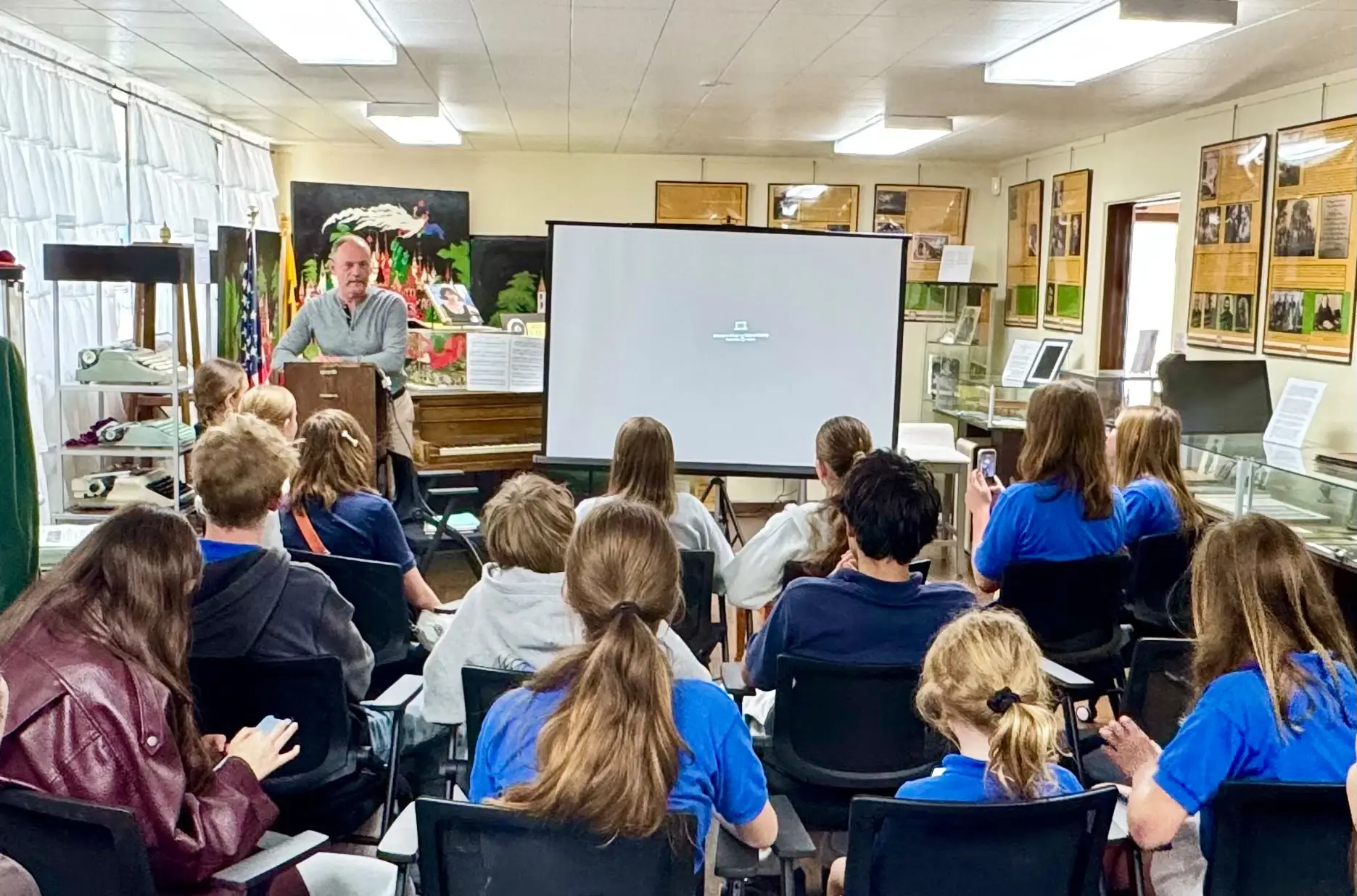
After the cathedral we went on to the Russian museum next to it, where local historian Ivan Podvalov had prepared a captivating lecture about Russian émigrés who left their mark on the history of Hollywood.
In the early twentieth century, after the Revolution and the Civil War, many of our compatriots ended up in America. They came from all walks of life and had to start over almost from scratch. For many of them, that new beginning was Hollywood.
In the silent film era a Russian accent was no obstacle to an acting career. Russian émigrés appeared in films, took part in crowd scenes, and played both leading and supporting roles.
Russian Cossacks were especially in demand. Superb riders who had grown up with horses and mastered the art of trick riding, they often worked on westerns and other films that called for fast gallops, thrilling chases on horseback and difficult stunts. What took many Hollywood actors long training came naturally to the Cossacks. Their skill, courage and horsemanship made them indispensable in many spectacular scenes.
With the arrival of sound films things changed: a foreign accent became a serious obstacle for many actors. Yet even then Russian émigrés found their place in the film industry. Some kept acting and became well-known performers; others worked as set designers, costume makers and studio staff, building furniture, props and sets for films.
Ivan Podvalov told us about these people’s lives, their talents, their hard work and their remarkable ability to find themselves in new circumstances.
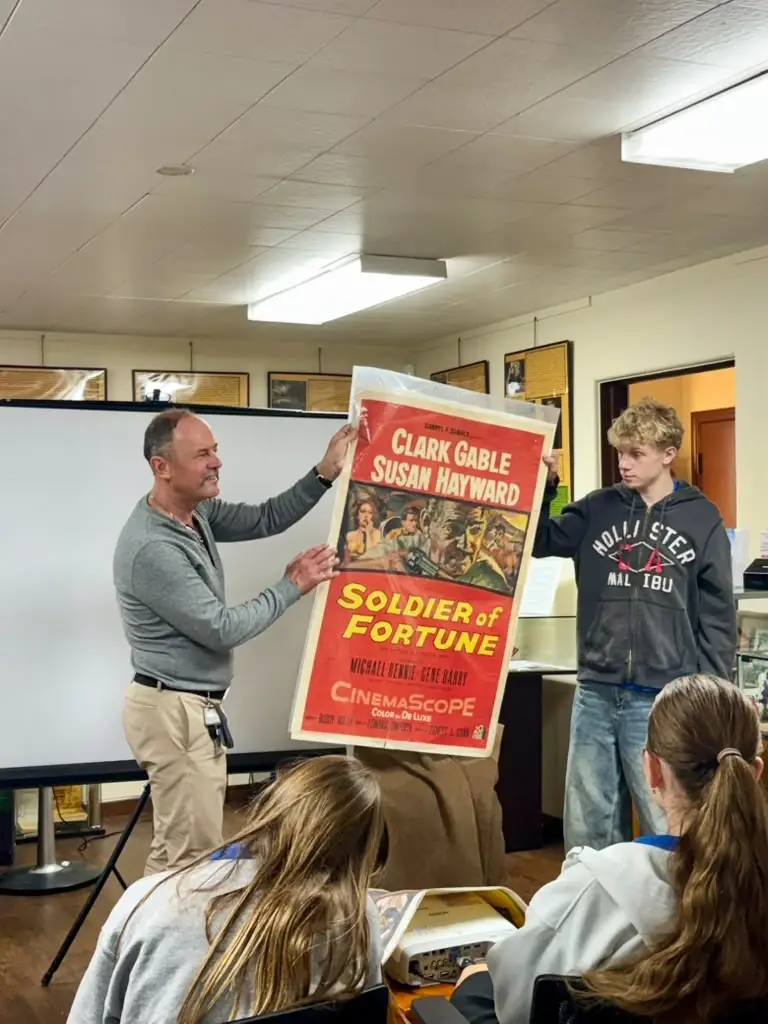
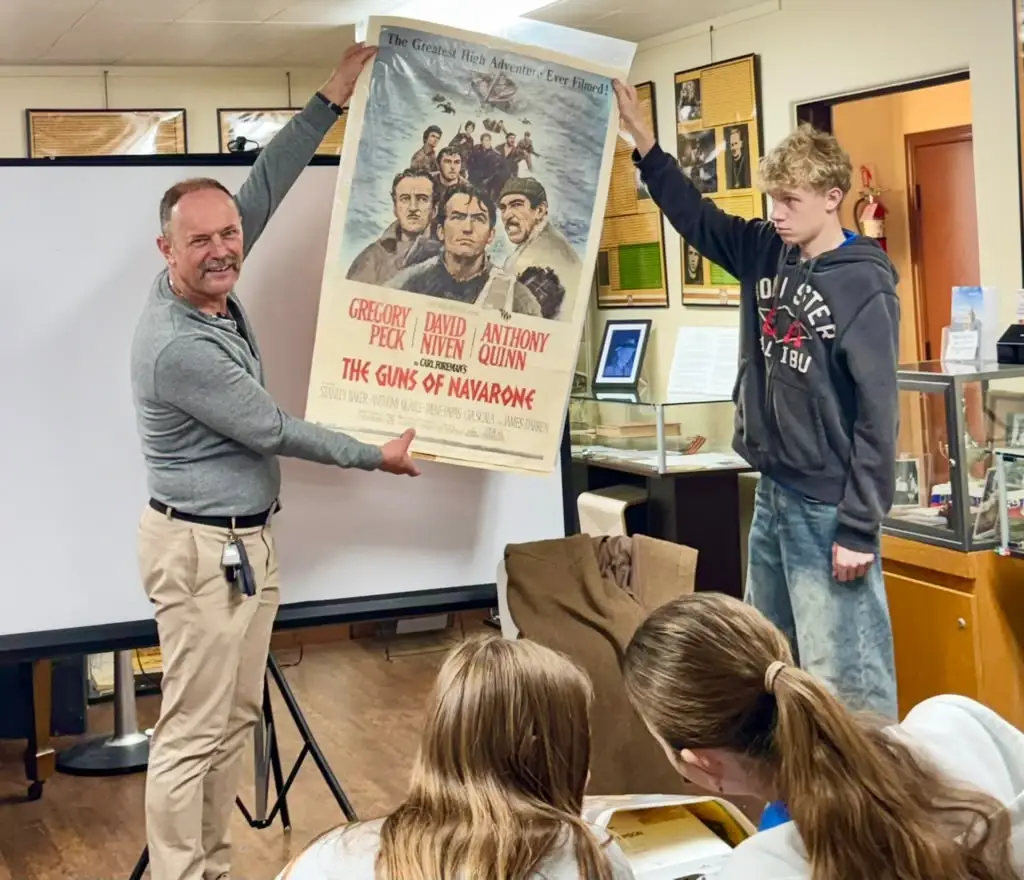
The lecture had a hands-on part, too. The students examined large posters of early Hollywood films, and Ivan Podvalov challenged them to find on these posters the names of the Russian actors he had talked about. This way the students not only learned about our compatriots but also worked with historical materials that show their part in the making of American cinema.
The lecture was planned to be short, but it was so interesting that children and adults alike had many questions, and it gradually turned into a lively conversation.
An Amazing Coincidence
One of the most unexpected discoveries of the day was the story of a portrait of Nadia Petrova, daughter of the well-known Russian engineer Alexander Petrov, who worked, among other places, in the design bureau of the great aircraft designer Igor Sikorsky.
The portrait was painted by Boris Chaliapin, son of the great Russian singer Feodor Chaliapin, a gifted portrait artist who became widely known in America for his work for TIME magazine. For many years his portraits of famous contemporaries graced its covers.
Imagine our surprise when, during the lecture, it turned out that Boris Chaliapin’s portrait of Nadia Petrova hangs in the home of one of our school families! The family had bought it at an auction long ago, and now, thanks to Ivan Podvalov, they learned new details about the young woman in the portrait and her family.
So, quite unexpectedly, the history of the Russian emigration turned out to be connected with a family from our own school. How many more remarkable stories are kept by the things around us in everyday life!
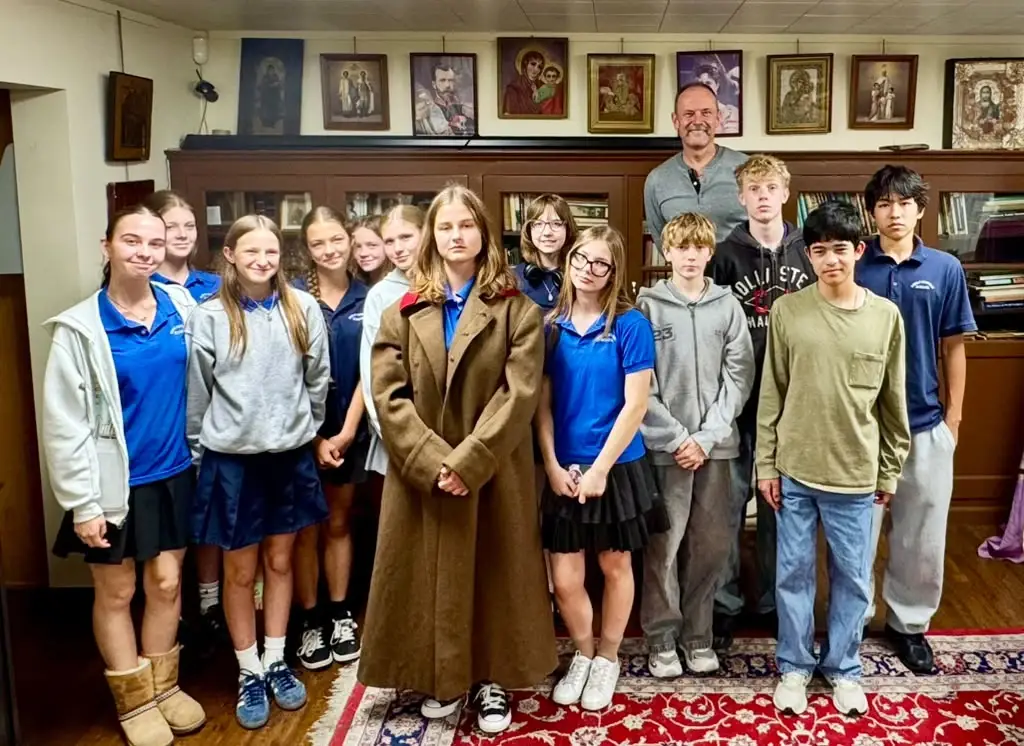
Another highlight was the chance to try on a real greatcoat from a Hollywood prop department, which Ivan Podvalov had managed to obtain from the studios. The students happily tried it on and, for a few moments, felt like characters in an old movie.
Our trip ended with a cozy tea party with bubliki, sweets and traditional Russian treats.
Photos from the Trip
With Warm Hearts
When we left the museum it was already completely dark. We went home with warm hearts, new knowledge, vivid impressions and gratitude for this wonderful day.
We took home not only the small icons we were given, but also a sense of belonging to a great story: the story of people who, far from their homeland, kept their love for it, passed on their faith and culture to the next generations, and made a significant contribution to American life.
We sincerely thank Father Nazariy for his warm welcome, a fascinating tour and his attention to our children; Ivan Podvalov for his captivating talk and the chance to touch the history of Russian Hollywood; and everyone who helped organize this wonderful visit.
Trips like this help our children not just study history but feel it, discover it for themselves, and understand that Russian culture lives right next to us: in churches, museums, family stories and even on the streets of our own Los Angeles.
By Svetlana Glinkina. Translated from Russian.